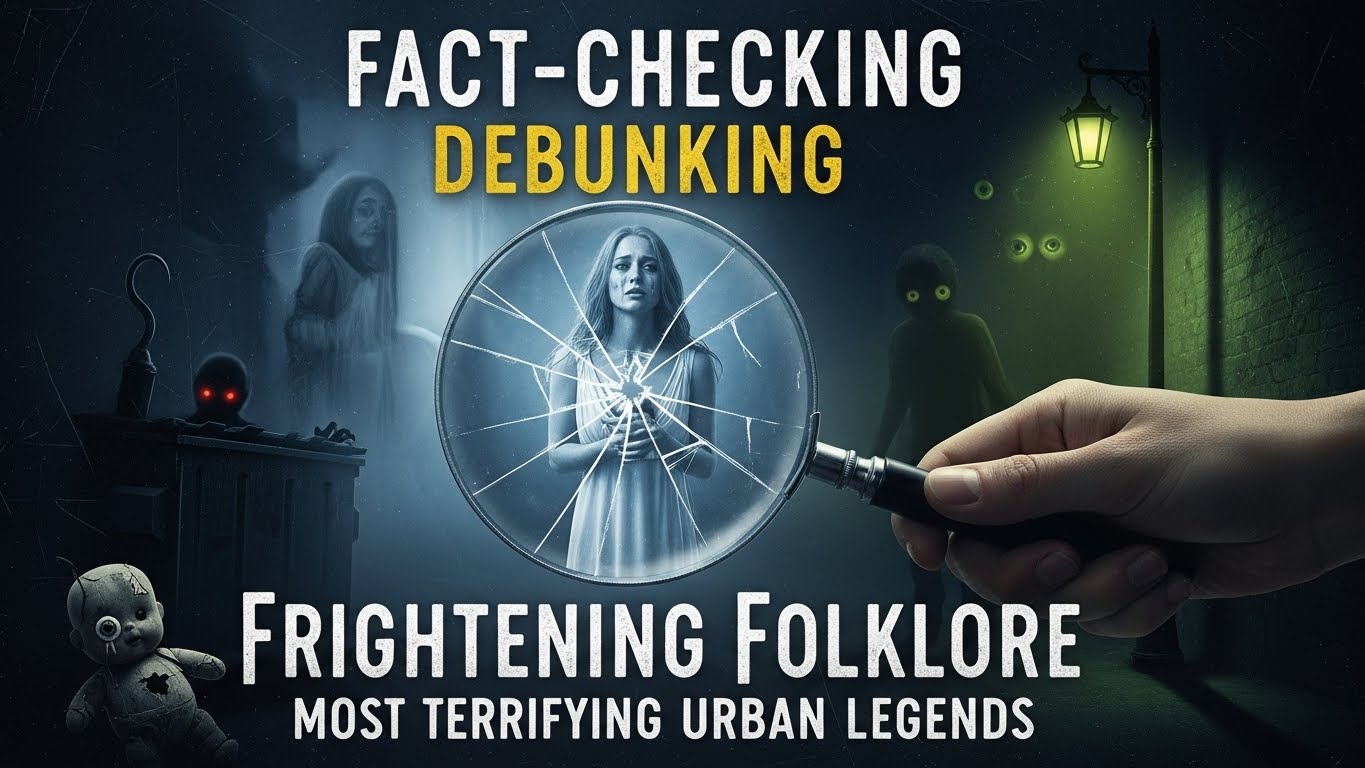
“Fact-Checking Frightening Folklore: Debunking the Most Terrifying Urban Legends”.
Updated: April 9, 2026
Fact-Checking Frightening Folklore: Debunking the Most Terrifying Urban Legends
Urban legends have a unique place in our culture, weaving stories that are equal parts thrilling and terrifying. From the chilling tales told around campfires to the spine-tingling stories whispered at sleepovers, these legends continue to capture our imaginations. But how many of these stories are actually true? In this article, we’ll delve into the origins of some of the most popular urban legends, separating fact from fiction and examining why these tales endure.
The Origins of Urban Legends
Urban legends often arise from a combination of fact, fiction, and cultural anxieties. They typically serve as cautionary tales, designed to warn or prepare individuals for potential dangers. According to Snopes, many urban legends stem from historical events that have been exaggerated or distorted over time. These stories evolve as they are retold, often incorporating contemporary fears and societal issues.
Some legends have roots in older folklore, dating back centuries. For instance, the tale of the vanishing hitchhiker has variations that can be traced to the Middle Ages. The persistence of these stories highlights their adaptability and the human tendency to use storytelling as a way to make sense of the world.
Debunking Popular Urban Legends
The Killer in the Backseat
One of the most enduring urban legends involves the unsuspecting driver who discovers a killer hiding in the backseat of their car. This story often serves as a warning to remain vigilant and aware of one’s surroundings. However, there is no documented case that matches the specifics of this legend. The tale likely originated from a combination of actual crimes and fictional stories, feeding off the fear of vulnerability while driving alone.

The Hook-Handed Man
This legend tells of a couple parked in a secluded area who hear a news bulletin about an escaped convict with a hook for a hand. They quickly leave, only to find a hook dangling from the car door handle. Like many urban legends, this story is designed to scare young couples and reinforce societal norms. Despite its popularity, there is no evidence to support the existence of such an incident. The narrative plays on fears of isolation and the unknown, common themes in urban legends.
The Kidney Heist
Perhaps one of the most terrifying urban legends involves individuals waking up in a bathtub filled with ice, only to discover their kidneys have been surgically removed. This story taps into fears of organ trafficking and medical exploitation. However, the World Health Organization has debunked this myth, clarifying that such organ thefts are logistically improbable due to the complexity of organ transplantation and preservation.
Why Do Urban Legends Persist?
The enduring nature of urban legends can be attributed to several factors. First, they often address universal fears, such as the fear of the unknown, vulnerability, and betrayal. These are deeply ingrained in the human psyche, making the stories relatable and memorable. Additionally, urban legends are often shared in a way that suggests they could happen to anyone, making them more personal and impactful.
Moreover, urban legends thrive in the digital age, spreading rapidly through the internet and social media. Platforms like Reddit provide a space for these stories to be shared, adapted, and kept alive. The interactive nature of online communities allows for continuous evolution and expansion of these tales, ensuring their longevity.
The Role of Fact-Checking in Urban Legends

In recent years, fact-checking organizations have played a crucial role in debunking urban legends. By investigating the origins and veracity of these stories, fact-checkers provide clarity and prevent misinformation from spreading. Websites like FactCheck.org are valuable resources for dispelling myths and educating the public on discernment.
Despite the presence of fact-checking, many people continue to believe in urban legends due to their emotional impact and the way they are presented as personal anecdotes. This highlights the importance of critical thinking and questioning the validity of sensational stories.
Takeaways
Urban legends will likely continue to captivate and terrify audiences for generations to come. While these stories often contain elements of truth, it is crucial to approach them with a healthy dose of skepticism. By understanding the origins and motivations behind these tales, we can appreciate them as cultural artifacts that reflect societal fears and values. As we continue to explore and debunk these legends, we gain insight into the human condition and the enduring power of storytelling.
Adapting Urban Legends for Modern Audiences
Urban legends, like all forms of folklore, are not static. They adapt to the cultural and technological contexts of the times. In the digital era, these legends have found new life through viral social media posts and digital storytelling platforms. The core elements of fear and intrigue remain, but the settings and details evolve to resonate with contemporary audiences.
For example, the classic tale of “Bloody Mary” has been reinvented in numerous ways online, often incorporating elements of augmented reality and interactive media. These adaptations ensure that urban legends remain relevant and engaging, allowing them to reach broader and younger audiences who consume stories in different formats than previous generations.
The Psychological Appeal of Urban Legends
Beyond their entertainment value, urban legends offer psychological insights into human behavior and societal fears. They often reflect underlying anxieties, such as the fear of strangers or the unpredictability of life. By externalizing these fears into tangible narratives, urban legends provide a coping mechanism, allowing individuals to confront their anxieties in a controlled and safe environment.

Moreover, urban legends often serve as moral tales, imparting lessons or warnings. For instance, stories of unintended consequences, like those in the “Cautionary Tale” genre, reinforce the importance of prudent decision-making and awareness. The combination of fear and morality makes these stories compelling and memorable.
Urban Legends in Popular Culture
The influence of urban legends extends into popular culture, inspiring countless books, films, and television series. Movies like “Candyman” and “Urban Legend” have drawn heavily from these tales, bringing them to life on the big screen and introducing them to new audiences. These adaptations often amplify the fear factor, playing on the visual and auditory elements that film can provide.
Television shows like “Supernatural” and “The X-Files” have also explored urban legends, using them as plot devices to delve into the supernatural and the unexplained. By incorporating these stories into mainstream media, urban legends gain a level of legitimacy and permanence, ensuring their place in the cultural zeitgeist.
The Educational Value of Urban Legends
While urban legends are primarily seen as entertainment, they also offer educational opportunities. By analyzing these stories, educators can explore themes of critical thinking, media literacy, and cultural studies. Urban legends can be used as case studies to teach students how to discern fact from fiction, encouraging skepticism and inquiry.

Additionally, urban legends provide a window into cultural history and societal change. By examining the origins and evolution of these stories, students can gain insights into the values and fears of different time periods. This makes urban legends a valuable tool for both historical and sociological education.
Conclusion: Embracing the Myths
In a world filled with uncertainties, urban legends offer a unique blend of fear and fascination. They challenge us to question our perceptions, explore our fears, and embrace the art of storytelling. While fact-checking and critical thinking are essential in navigating these tales, it’s equally important to appreciate them as cultural expressions that reflect the complexities of human experience.
As we continue to share and adapt urban legends for future generations, we ensure that these stories remain a vital part of our cultural fabric. Whether as cautionary tales or thrilling narratives, urban legends will continue to captivate our imaginations, reminding us of the power of stories to shape and reflect our world.
Urban Legends and the Impact of Technology
The advent of technology has significantly impacted the way urban legends are created and disseminated. With the rise of the internet, these stories spread faster and further than ever before. Social media platforms like Twitter and Facebook provide fertile ground for the rapid sharing of these tales, often amplifying their reach and impact.
Additionally, technology has led to the creation of new urban legends, often revolving around the digital world itself. Stories of haunted websites, cursed emails, or mysterious glitches that lead to sinister outcomes reflect modern anxieties about technology and its role in our lives. These digital-age legends highlight the adaptability of folklore, evolving to address contemporary issues and fears.
Global Variations of Urban Legends
While many urban legends are rooted in specific cultural contexts, the globalization of media has led to the cross-pollination of stories across borders. As a result, many urban legends have international counterparts, with local variations reflecting regional beliefs and concerns. For example, the “Vanishing Hitchhiker” has variations worldwide, each with unique cultural twists.

This global exchange of folklore enriches the tapestry of urban legends, allowing for a diverse range of stories that resonate with people from different backgrounds. It also underscores the universal nature of these tales, as themes of fear, morality, and the supernatural are common to all human societies.
The Future of Urban Legends
As society continues to evolve, so too will the urban legends that mirror our collective fears and fascinations. Emerging technologies, such as virtual reality and artificial intelligence, may inspire a new generation of legends that explore the boundaries between reality and the digital realm. These advancements will likely lead to innovative ways of experiencing and telling these stories, further blurring the lines between truth and fiction.
Moreover, as global connectivity increases, we can expect a continued blending of cultural narratives, resulting in richer and more complex urban legends. This fusion will ensure that these stories remain dynamic and relevant, reflecting the ongoing changes in our world.
Conclusion: The Timelessness of Urban Legends
Urban legends have stood the test of time, continually evolving to captivate and terrify audiences. Whether serving as cautionary tales or thrilling narratives, these stories provide valuable insights into human fears, cultural values, and societal change. By examining and debunking urban legends, we not only uncover the truths behind these tales but also gain a deeper understanding of ourselves and the world around us.
As we continue to navigate the complexities of modern life, urban legends will remain a vital part of our cultural heritage, reminding us of the enduring power of storytelling. Whether shared around a campfire or through a viral tweet, these legends will continue to fascinate and inspire, reflecting the timeless nature of human curiosity and imagination.