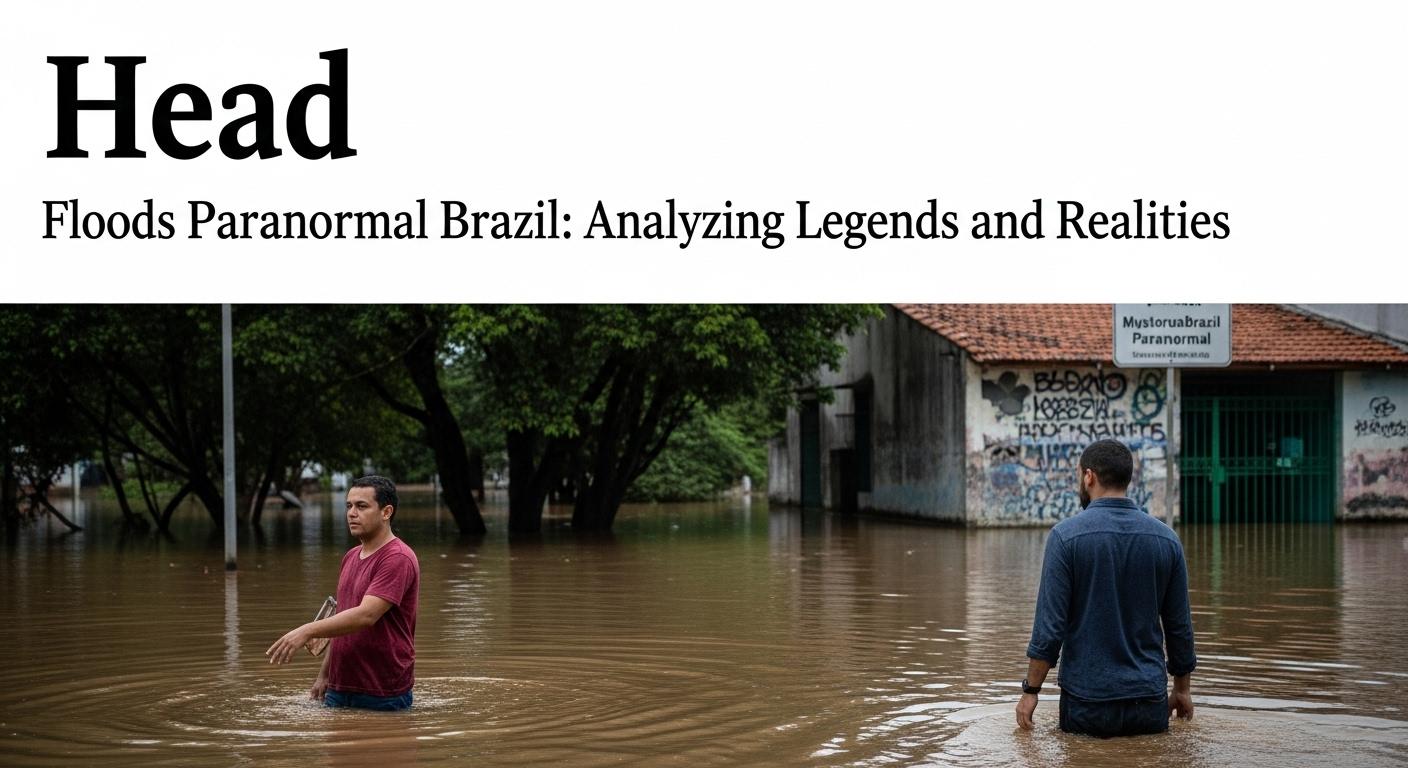
Flooded Brazilian street at dusk with residents and river-spirits imagery.
Updated: April 9, 2026
The phrase floods Paranormal Brazil has surfaced in discussions around recent downpours that swelled rivers, displaced families, and unsettled neighborhoods along Brazil’s southeast coast. As rescuers race to locations cut off by rising water, residents confront not only the physical danger but the stories that flood the public imagination—tales that stretch from meteorology to myth and back again.
Weather, Water, and the Narrative
Heavy rains in the region over the past weeks overwhelmed municipal drainage systems, pushing small rivers into their banks and turning streets into channels. Officials cited El Niño-driven moisture and shifting patterns that concentrate rainfall in short bursts. In such conditions, the observable hazard—rapid floods—becomes a canvas for interpretation. People who share updates online must decide what information is reliable when official warnings lag or conflict with local experience. The result is that the disaster becomes multi-layered: hydrological risk on one axis, and a contagion of stories on another. In these moments, the label floods Paranormal Brazil often functions as a shorthand for uncertainty, fear, and the human impulse to seek agency when water seems to rise faster than plans to control it.
From a risk-communication perspective, the equation is simple and painful: more rainfall and heavier rivers increase evacuations; but inconsistent messaging and varied access to resources erode trust. In poorer neighborhoods, residents may rely on community networks and informal alert systems, which are efficient but imperfect. The paranormal framing, while not a scientific claim, signals a need to address not just the flood waters but the social weather—the mood of communities, the rumor mills, and the emotional aftershocks that follow every surge. This framing matters because perception often shapes behavior: people who believe disaster will escalate may rush to evacuate, while those who hear demoralizing or sensational accounts may disengage from official guidance.
Folklore in the Flood Narrative
Brazilian folklore provides a long lens through which communities make sense of water, danger, and sudden change. Rivers are not only hydrological features but conduits for myth and memory. Tales of Iara, the water-dwelling figure drawn to mournful calls in flooded banks, or Boitatá, the fire-serpent guardian of the wetlands, recur in conversations after floods. In many towns, elders recount how legends warned them to listen for signs before rainfall peaks, while younger residents lean on weather apps and municipal alerts. The coexistence of scientific forecasts with ritual caution creates a hybrid warning system: when the river swells, people may pause to listen for both data and stories. The “paranormal” descriptor thus functions as a cultural shorthand for the unseen—whether it is an unexplained glow on the water, a sensed presence near the floodline, or simply a heightened sense that something beyond numbers is at play. Analyzing this interface matters because it reveals what communities value: prompt alerts, respect for tradition, and a space to voice fear without ridicule.
Evidence, Belief, and Public Response
Claimed testimonies of unexplained phenomena—strange lights, whispers over the floodwaters, or brief apparitions by the riverbank—circulate alongside photographs and eyewitness accounts. Experts caution that such reports are inherently subjective, shaped by stress, environmental cues, and the slippage between memory and perception. From the public side, the interaction between belief and evidence can either encourage resilience or fuel misinformation. Officials have to navigate this terrain carefully: acknowledging communities’ fears without validating unverified claims, while continuing to deliver reliable flood warnings, maps, and shelter information. The paradox of flood response in a culturally rich environment is that credibility depends not only on an accurate forecast but on how transparently authorities communicate uncertainties and how well they incorporate cultural context into messaging. When people feel heard, confidence in official guidance tends to rise, which improves evacuation adherence and reduces risk, even amid ambiguous phenomena.
Policy and Preparedness Under Scrutiny
Long-running flood risk in southeastern Brazil has pushed policymakers to re-examine infrastructure, land-use planning, and emergency logistics. The current events spotlight gaps: aging drainage networks, insufficient retention basins, and the difficulty of reaching isolated communities quickly. Yet the discourse around preparedness cannot ignore cultural dimensions. Integrating local leaders, faith groups, and folkloric narrators into risk communication can improve message reach and legitimacy. Proactive steps might include bilingual or culturally tuned alerts, community mapping of flood-prone zones involving resident associations, and mental-health support integrated into disaster response teams. The practical question is not merely whether to invest in concrete barriers or pumps, but how to craft a resilience strategy that respects local knowledge, reduces panic, and channels fear into constructive action. The result would be a more durable readiness that can withstand both rising flood heights and the social storms that ride on their heels.
Actionable Takeaways
- Verify information through official channels before sharing on social platforms to prevent rumor amplification.
- Involve local cultural leaders and historians in risk communications so that messages resonate across communities without dismissing folklore.
- Invest in rapid-response infrastructure: readable evacuation routes, accessible shelters, and clear, multilingual alerts for vulnerable neighborhoods.
- Provide mental-health support and community debriefs post-disaster to address the emotional impact of floods and the paranormal narratives that accompany them.
- Document community narratives for long-term resilience planning, using both meteorological data and cultural context to guide preparedness.