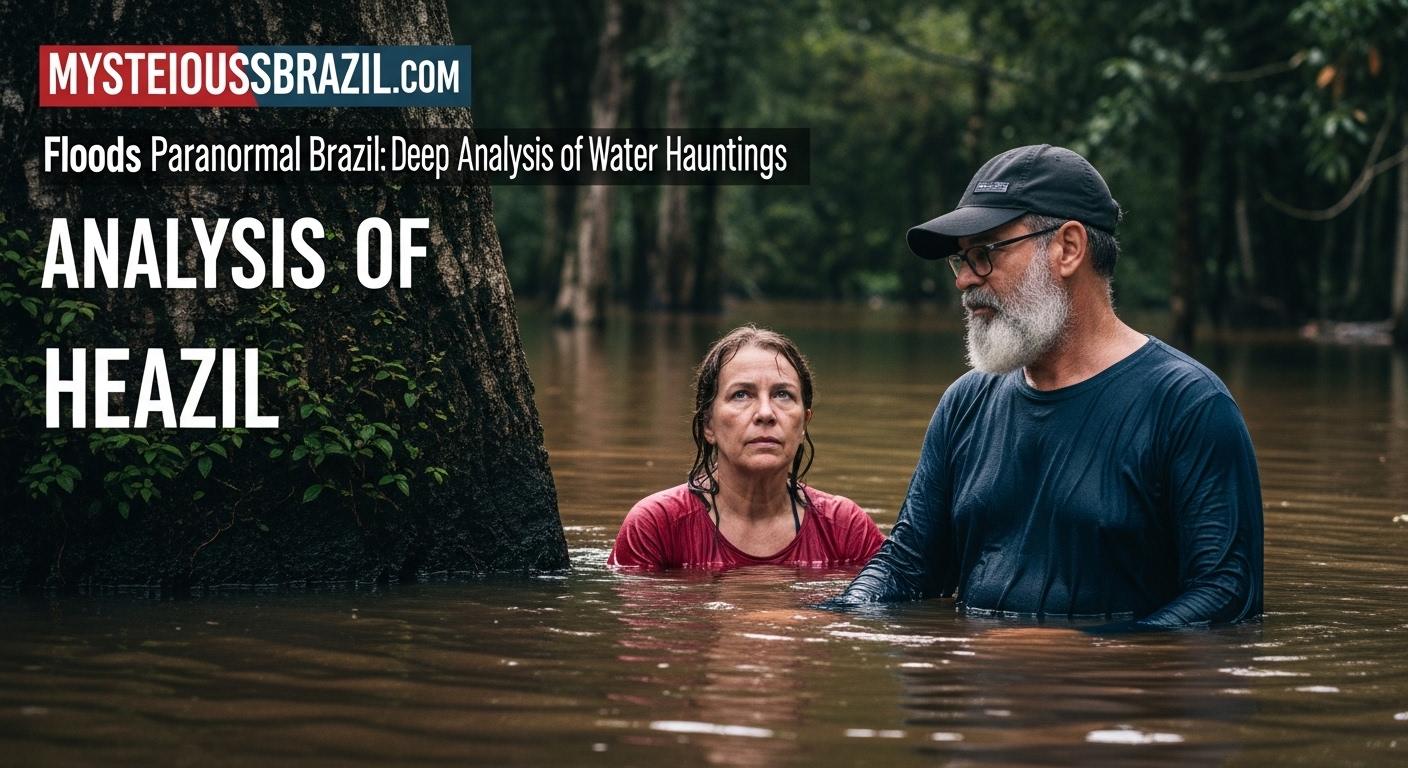
Flooded Brazilian city at dusk with researchers documenting paranormal impressions along the waterline.
Updated: April 9, 2026
In southeastern Brazil, when rivers swell and neighborhoods vanish under murky waters, residents report more than water—whispers of spirits, figures at the waterline, and sounds echoing through flooded streets. This intersection of meteorology and folklore has framed a debate about floods Paranormal Brazil, where storms provoke not only physical danger but cultural memory and local narratives that endure long after the water recedes.
Context: Floods and folklore in Brazil
Brazil’s flood-prone zones along the Atlantic coast and in the Southeast have long been a stage where climate and culture clash. In communities from São Paulo’s outskirts to smaller river towns, water is not merely a hazard but a catalyst for memory. Residents recount nighttime noises near the river, lights drifting along the floodplain, and objects displaced by currents that some interpret as signs from river spirits or guardian figures. Analysts note that such experiences are often amplified by shared language, social media, and relief campaigns; as rainfall intensifies with climate variability, the volume of anecdotal reports grows, shaping a regional folklore of water and weather that persists across generations.
Paranormal interpretations and caution
Paranormal interpretations frequently emerge where families and communities are already under stress from displacement and property loss. Episodes described as apparitions, orbs, or sudden cold pockets at the edge of flooded districts can be rooted in environmental factors—wind, echoes, and the acoustic reverberations of empty houses—as much as in metaphysical beliefs. Journalists and researchers must differentiate between subjective experiences and verifiable evidence, while still acknowledging the cultural logic that ties local identity to water. Responsible reporting involves documenting testimonies with care, avoiding sensational labeling, and cross-checking claims against meteorological data, flood maps, and casualty or disruption reports from official sources. The objective is to respect belief systems without letting fear drive narratives that could stigmatize communities or misallocate relief resources.
Socioeconomic ripple effects and risk management
Beyond the immediate dangers, floods reshape livelihoods, housing, and trust in public institutions. Small towns face housing displacement, contamination of drinking water, and interruptions to schools and clinics. In this context, paranormal folklore can function as a coping mechanism, offering cohesion and meaning when tangible aid is delayed. Local economies may also experience a paradoxical uplift around “haunted” tourism or storytelling nights that pair weather history with cultural legends. Yet the same period raises questions about risk communication: how do authorities convey safety instructions without dismissing residents’ experiences? A practical approach combines rapid hazard mapping, transparent communication about uncertainties, and community-led documentation projects that catalog environmental changes alongside reported phenomena, so resources reach those most affected while maintaining credibility.
Toward a coherent narrative: evidence, myth, and policy
A coherent narrative requires bridging empirical data with cultural context. Climate models, rainfall records, and flood-warning systems should anchor reporting on events, while folklore and experiential reports illuminate how communities interpret those events. Policymakers can benefit from interdisciplinary collaboration: meteorologists work with anthropologists, urban planners, and local leaders to develop messaging that acknowledges concerns about hauntings while prioritizing safety and resilience. Practical policy steps include improving early-warning dissemination in flood-prone neighborhoods, investing in flood defenses and drainage improvements, and supporting community-based documentation initiatives that capture both scientific measurements and personal experiences. This dual approach helps prevent a false dichotomy between science and belief, enabling a more nuanced public conversation about risk and adaptation.
Actionable Takeaways
- Center evidence-based reporting that respects local beliefs, avoiding sensationalism or moral judgments about paranormal claims.
- Document experiences methodically, noting time, location, environmental conditions, and corroborating data from weather and flood authorities.
- Coordinate with local leaders to translate warnings into actionable safety steps that communities can implement during floods.
- Invest in transparent risk communication that acknowledges uncertainty while providing clear guidance on evacuation, shelter, and resource access.
- Balance cultural storytelling with scientific literacy to support resilience without eroding trust in institutions.
Source Context
For broader context on flooding and public response in the region, see: Southeast Brazil flood coverage.
Additional regional context can be found in coverage from major outlets that discuss how climate-related events are reshaping public discourse and policy. For example, reporting on economic and political dimensions of flooding and related reactions is illustrated in pieces such as: Bloomberg coverage on trade dynamics and policy implications.