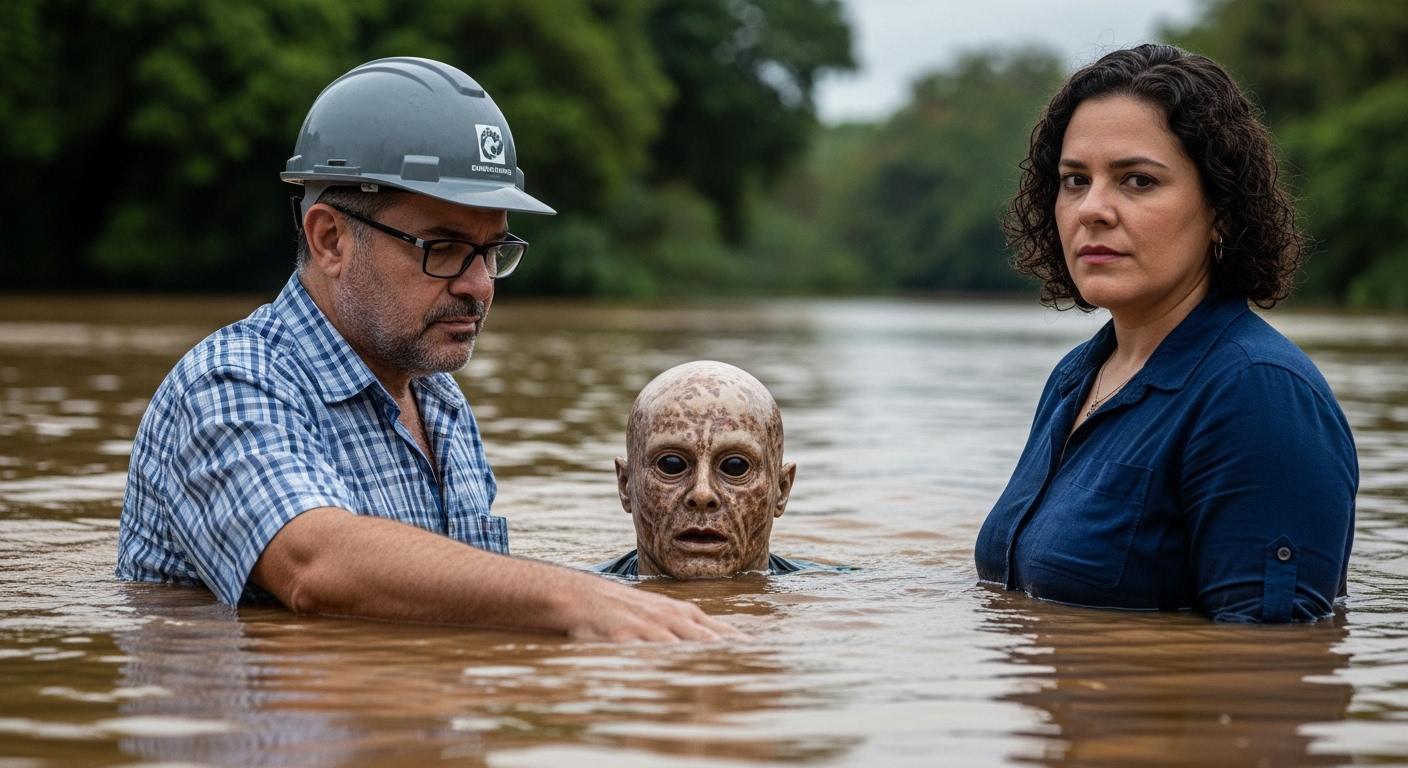
Flooded Brazilian street at dusk with mist and distant rescue boats.
Updated: April 9, 2026
Paranormal Brazil has moved from isolated legends to a topic of mainstream curiosity in recent years, as local communities, researchers, and online platforms converge to interpret ambiguous sightings, lights in the forest, and unexplained weather patterns that defy easy explanations.
Context: What counts as paranormal in modern Brazil
In Brazil, paranormal narratives emerge from a cultural mosaic that blends indigenous, Afro-Brazilian, and rural traditions. Legends such as Curupira, the forest guardian with backward feet; Iara, the river enchantress; and Boitatá, the fiery serpent, provide interpretive lenses when people encounter anomalies—bright orbs on a riverbank, unexplained howling in the canopy, or sudden weather shifts along the highways. The same stories travel from the Amazon to the Sertão and into urban neighborhoods, where smartphones turn personal experience into shareable content. This context matters because it shapes what counts as evidence, what gets recorded, and how communities respond. In many regions, the paranormal is not merely a curiosity but a language for expressing fear, memory, and local identity. The challenge for serious analysis is to distinguish the social function of these narratives from their factual status, without dismissing lived experiences that communities rely on for guidance and meaning.
Media, folklore, and social dynamics
The digital age has redefined how stories of the paranormal spread in Brazil. YouTube channels, WhatsApp groups, and local news outlets can amplify accounts within hours, often blurring lines between anecdote and evidence. Sensational headlines can spur engagement, but they also risk eroding public trust when later corrections appear or when reports lack independent verification. At the same time, mainstream productions like Cidade Invisível have brought Brazilian folklore into wider consciousness, inviting audiences to compare myth with contemporary life. The result is a feedback loop: a rumor begins as a viral post, experts are invited to weigh in, and communities begin to document with cameras, audio recorders, and field notebooks. This dynamic matters because it reframes what journalism should aim to do: illuminate not just what is claimed, but how and why the claim resonates across Brazil’s diverse social fabric.
Evidence, methodology, and credible inquiry
Proper analysis requires a framework for evaluating claims that respects local context while applying rigorous standards. Investigators emphasize reproducibility, verifiable data, and transparency about uncertainty. Methods include geolocation of sightings, time-stamping, cross-referencing with meteorological data, and expert reviews of video and audio recordings using standard forensic criteria. However, researchers also recognize the limits of technology in rural environments where lighting is poor, and witnesses may rely on memory under stress. A practical approach combines community-sourced reports with independent corroboration, enabling researchers to separate patterns from peaks of hype. In Brazil, where resources for formal investigations vary by region, partnerships between local organizations and independent researchers can create safer, more credible reporting ecosystems that respect residents’ experiences without exploiting them.
Practical paths forward for communities and reporters
To move from spectacle to responsible understanding, journalists and civic groups should adopt a few core practices. First, establish clear criteria for what constitutes credible evidence, including corroboration, documentation standards, and a commitment to acknowledge uncertainty. Second, engage with communities as partners, not subjects; this means giving residents space to tell their stories while offering access to verification tools and expert guidance. Third, protect vulnerable participants from sensationalization and avoid sensational terms or stigmatizing labels. Fourth, consider the social and economic dimensions—paranormal narratives can affect tourism, local economies, and land-use decisions—so reporting should weigh benefits and risks. Finally, invest in capacity-building: train local informants, fund small-scale fieldwork, and foster collaborations between independent researchers, folklore scholars, and scientists. This pragmatic framework moves Paranormal Brazil from rumor to accountable inquiry that respects culture, fosters resilience, and informs public discourse.
Actionable Takeaways
- Develop a clear evidence standard for paranormal reports, including documentation and independent verification.
- Engage with community leaders to co-create reporting that respects local folklore and memory.
- Avoid sensational labels and provide transparency about uncertainty and limitations.
- Leverage cross-disciplinary panels (folklore, anthropology, meteorology, forensics) for credible assessment.
- Protect participants from exploitation and avoid monetizing their experiences without consent.
Source Context
Actionable Takeaways
- Track official updates and trusted local reporting.
- Compare at least two independent sources before sharing claims.
- Review short-term risk, opportunity, and timing before acting.