Brazil Paranormal Brazil: Deep Analysis of Local Mysteries
Updated: April 9, 2026
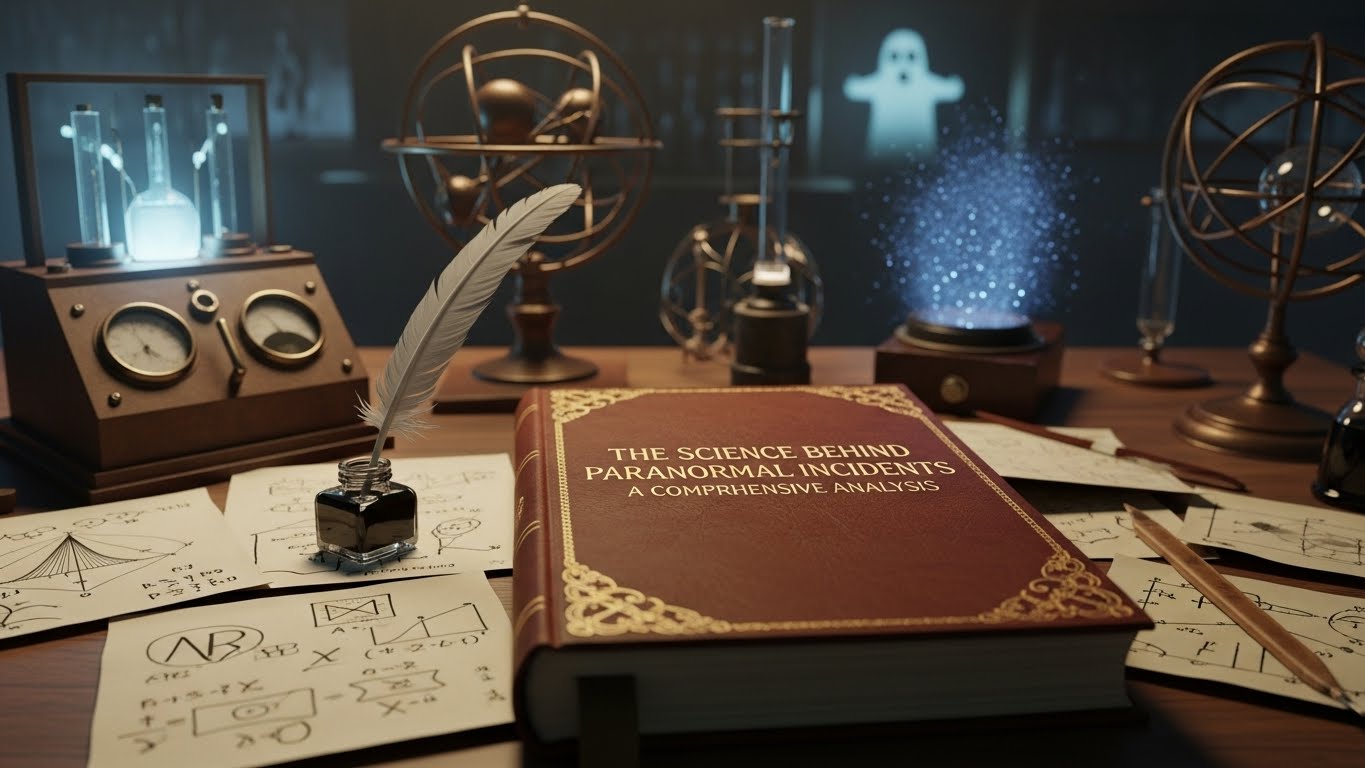
The Science Behind Paranormal Incidents: A Comprehensive Analysis
For centuries, stories of paranormal incidents have captured human imagination, leading to questions about the mysterious and the unexplained. These phenomena, ranging from ghost sightings to telekinesis, often prompt both fear and fascination. But what is the science behind these paranormal events? This post delves into the scientific analysis of paranormal incidents, exploring the psychological, environmental, and neurological factors that may contribute to these occurrences.
The Psychology of Paranormal Experiences
One of the primary lenses through which scientists study paranormal phenomena is psychology. A significant aspect of understanding paranormal experiences involves examining the human brain and its susceptibility to illusions and cognitive biases.
Many psychological theories suggest that our perception of the world is not always accurate. For instance, the brain’s tendency to see patterns, known as pareidolia, can lead individuals to perceive faces or figures in random stimuli, such as shadows or reflections. This phenomenon can often explain sightings of ghostly apparitions.
Moreover, confirmation bias plays a crucial role in paranormal experiences. People who believe in the paranormal are more likely to interpret ambiguous events as evidence supporting their beliefs. This bias can perpetuate the belief in the supernatural, even in the absence of verifiable evidence.
Environmental and Physical Factors
In addition to psychological aspects, environmental and physical factors can significantly influence paranormal experiences. Several studies have explored the role of electromagnetic fields (EMF), infrasound, and geophysical conditions in these phenomena.

Electromagnetic fields, often emitted by household appliances or natural sources, have been linked to feelings of being watched or touched, sensations frequently associated with haunted locations. Some researchers propose that exposure to high levels of EMF can affect brain function, leading to perceptions of the paranormal.
Similarly, infrasound, which refers to sound waves below the frequency of human hearing, has been shown to cause discomfort, anxiety, and even hallucinations. Natural occurrences such as earthquakes or severe weather can generate infrasound, potentially contributing to eerie sensations in supposedly haunted places.
Neurological Explanations
Neurological research provides another perspective on paranormal incidents. Certain brain conditions and alterations can lead to experiences that are interpreted as supernatural. For example, temporal lobe epilepsy can produce vivid hallucinations and intense emotional experiences, which might be construed as paranormal encounters.
Furthermore, sleep disorders such as sleep paralysis are known for causing individuals to experience terrifying hallucinations of shadowy figures or intruders. During sleep paralysis, the brain is in a state between waking and dreaming, leading to a mixture of dream imagery with physical reality. This condition can easily be mistaken for a supernatural event.
Cultural and Social Influences
Cultural and social contexts also play a significant role in shaping beliefs about the paranormal. The media, folklore, and societal norms can influence how individuals perceive and report paranormal experiences.
Media portrayals of the supernatural, such as in movies, books, and television shows, often sensationalize and dramatize paranormal events. This can create unrealistic expectations and fears, affecting how people interpret real-world experiences. Additionally, cultural folklore often includes tales of spirits and ghosts, which can reinforce and perpetuate beliefs in the paranormal.
Social factors, such as the desire for attention or community acceptance, can also contribute to the reporting of paranormal incidents. In some cases, individuals may exaggerate or fabricate experiences to fit social narratives or gain notoriety.
The Role of Scientific Skepticism
While many individuals believe in the existence of paranormal phenomena, the scientific community generally approaches these claims with skepticism. The lack of empirical evidence and the inability to replicate paranormal events under controlled conditions present significant barriers to scientific validation.
Scientific skepticism encourages a critical examination of evidence and a reliance on the scientific method to explore and explain phenomena. This approach helps to differentiate between genuine anomalies and those that can be attributed to known psychological, environmental, or neurological factors.
Case Studies and Research
Several case studies and research projects have attempted to explore paranormal incidents scientifically. For example, investigations into haunted locations often involve the measurement of environmental factors such as EMF levels, temperature fluctuations, and sound frequencies.
Research into the placebo effect has also been relevant, demonstrating how belief in the paranormal can lead to psychological and physiological responses. These studies highlight the complex interplay between belief, expectation, and perception in shaping paranormal experiences.
Conclusion: Bridging the Gap Between Science and Belief
While the allure of the paranormal continues to captivate many, scientific inquiry provides valuable insights into the underlying mechanisms of these phenomena. By examining psychological, environmental, and neurological factors, researchers can demystify many experiences commonly attributed to the supernatural.
Ultimately, understanding the science behind paranormal incidents encourages a balanced perspective that respects both empirical evidence and human curiosity. As research continues to evolve, it may not only explain current paranormal experiences but also uncover new facets of human perception and cognition.
Whether you are a skeptic or a believer, the journey to unravel the mysteries of the paranormal is a fascinating exploration of the human mind and the world around us. As science advances, it may one day provide definitive answers to questions that have intrigued humanity for centuries.
Future Directions in Paranormal Research
As we look to the future, the study of paranormal incidents is poised to benefit from advances in technology and interdisciplinary collaboration. These developments may pave the way for a deeper understanding of the phenomena that have long eluded scientific scrutiny.
One promising avenue is the integration of artificial intelligence and machine learning into paranormal research. These technologies can analyze vast amounts of data from reports, environmental sensors, and neurological studies to identify patterns and correlations that might not be apparent through traditional methods. Such insights could reveal previously undiscovered links between psychological states and environmental conditions that contribute to paranormal experiences.
Furthermore, advancements in neuroimaging techniques, such as fMRI and EEG, provide researchers with the tools to explore the brain’s response to stimuli associated with paranormal experiences. By mapping brain activity in real-time, scientists can gain a better understanding of the neurological processes involved in perception and belief, potentially uncovering why certain individuals are more prone to experiencing the paranormal.
Interdisciplinary Collaborations
Interdisciplinary collaborations between psychologists, neuroscientists, physicists, and cultural anthropologists are crucial in advancing the study of paranormal incidents. These partnerships allow for a more holistic approach, integrating diverse perspectives and methodologies to address the multifaceted nature of these phenomena.
For example, physicists can contribute to understanding the physical properties of environments labeled as haunted, while cultural anthropologists can provide context on how cultural narratives shape beliefs and perceptions. Psychologists and neuroscientists can then interpret these findings within the framework of human cognition and behavior.
Such collaborative efforts can help bridge the gap between scientific inquiry and the subjective nature of paranormal experiences, fostering a dialogue that respects both empirical evidence and cultural significance.
The Role of Public Engagement and Education
Public engagement and education play a pivotal role in demystifying paranormal phenomena and promoting a science-based understanding. By fostering critical thinking and scientific literacy, educational initiatives can empower individuals to assess claims of the supernatural with a skeptical yet open-minded approach.
Workshops, documentaries, and interactive exhibits that explore the science of perception, illusion, and belief can provide valuable insights into the mechanisms that underlie paranormal experiences. These educational platforms can also highlight the importance of scientific skepticism and the process of scientific inquiry in evaluating extraordinary claims.
Moreover, engaging the public in citizen science projects, where individuals contribute to data collection and analysis, can enhance the scope of paranormal research. By participating in these initiatives, people can become active contributors to the scientific exploration of the paranormal, fostering a community of inquiry and discovery.
Conclusion: Embracing the Mysteries
The exploration of paranormal incidents is a journey that challenges our understanding of reality and the limits of human perception. While scientific research has made significant strides in explaining many aspects of these phenomena, the allure of the unknown continues to captivate our imagination.
By embracing a rigorous scientific approach, coupled with an appreciation for cultural narratives and personal experiences, we can navigate the complex landscape of the paranormal with curiosity and respect. As science and technology continue to evolve, they hold the potential to unlock new dimensions of understanding—transforming the mysteries of the paranormal into opportunities for learning and growth.
Whether we are drawn to the paranormal out of intrigue, skepticism, or belief, the quest for knowledge remains a testament to the enduring human spirit and our unyielding desire to explore the mysteries of our world.