Investigating the Unseen: Equipment and Techniques Used in Paranormal Studies
The world of the paranormal has long fascinated both skeptics and believers alike. From ghostly apparitions to unexplained noises, these phenomena continue to intrigue those who wish to understand the unknown. While science has yet to provide definitive explanations for these occurrences, the field of paranormal studies has developed an array of equipment and techniques aimed at investigating these mysterious events. As interest grows, more sophisticated tools and methods are being employed to bridge the gap between the seen and the unseen. This article dives deep into the equipment and techniques used in paranormal studies, offering insights into how investigators aim to uncover what lies beyond our current understanding.
The Role of Technology in Paranormal Investigations
Technology has become an indispensable ally in paranormal investigations. Modern gadgets and devices enhance the ability to detect, record, and analyze phenomena that would otherwise go unnoticed. From digital recorders to infrared cameras, technology provides a way to gather and scrutinize evidence that could hint at the paranormal. Let’s delve into some key pieces of technology used in these investigations.
EMF Meters: Detecting Unseen Energies
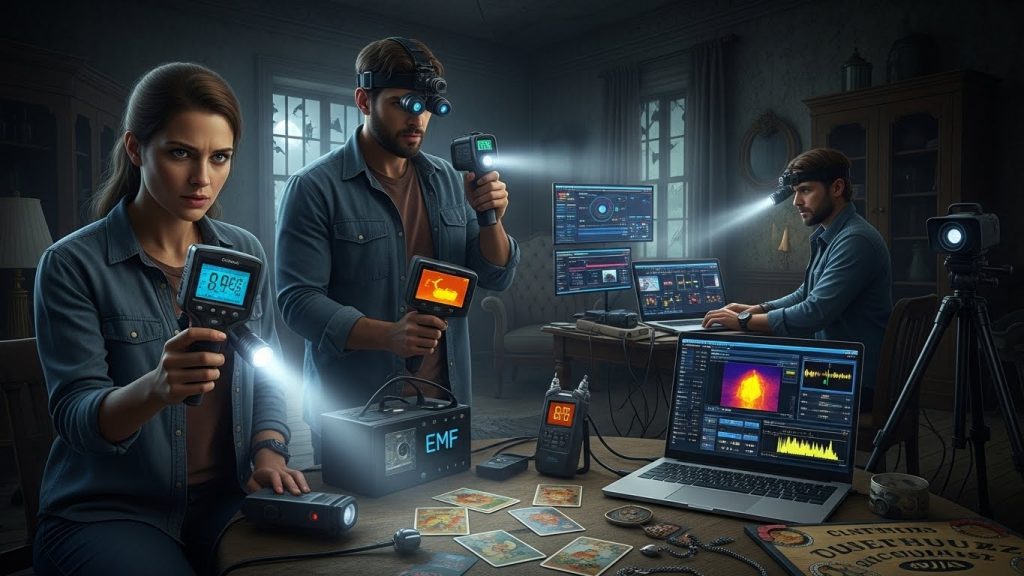
Electromagnetic Field (EMF) meters are among the most commonly used tools in paranormal research. The theory behind their use is that spirits and other paranormal entities may emit or disrupt electromagnetic fields. By measuring fluctuations in these fields, investigators hope to identify areas of paranormal activity.
EMF meters come in various forms, from basic models that measure general field strength to advanced versions that can pinpoint specific frequencies. Investigators often use these devices in locations where paranormal activity is reported, such as old buildings or historical sites. While a spike in EMF readings does not guarantee the presence of a ghost, it can indicate an area worth further exploration.

Digital Voice Recorders: Capturing the Unheard
Electronic Voice Phenomena (EVP) are sounds found on electronic recordings that are interpreted as spirit voices. Investigators use digital voice recorders to capture these voices, which may not be audible in real-time. During an investigation, the team will ask questions while recording and later analyze the audio for any unexplained responses.
Advanced software programs can assist in cleaning up the recordings and isolating potential EVPs. While skeptics argue that EVPs can be explained by auditory pareidolia or interference, for many researchers, these recordings are compelling evidence of paranormal communication.
Infrared and Full-Spectrum Cameras: Seeing Beyond the Visible
Cameras with infrared and full-spectrum capabilities allow investigators to capture images in conditions where traditional cameras might fail. Infrared cameras detect heat patterns, which can reveal anomalies that are not visible to the naked eye. Full-spectrum cameras, meanwhile, capture a wider range of light, including ultraviolet and infrared, potentially revealing entities that exist outside the visible spectrum.
These cameras are particularly useful in dark or low-light environments where many paranormal events are said to occur. The images and videos captured can then be analyzed for anomalies such as orbs, shadows, or other unexplained phenomena.
Thermal Imaging Cameras: Mapping the Unseen
Thermal imaging cameras are another vital tool in the paranormal investigator’s arsenal. These devices visualize heat emissions, allowing investigators to see temperature differences across surfaces. The theory is that paranormal entities may cause temperature fluctuations, creating cold or hot spots that could indicate their presence.
Thermal cameras provide a visual representation of these temperature changes, making it easier to spot anomalies during an investigation. Although temperature changes can have numerous explanations, consistent patterns in specific locations can be a strong indication of paranormal activity.
Spirit Boxes: Real-Time Communication
Spirit boxes, or ghost boxes, are devices used for attempting real-time communication with spirits. These gadgets sweep through radio frequencies, creating a constant white noise that spirits are believed to be able to manipulate to form words or phrases. Investigators ask questions and listen for coherent responses amid the static.
While some dismiss spirit boxes as mere entertainment, proponents argue that they can produce surprisingly accurate and relevant responses. As with all paranormal equipment, the results are subjective and require careful analysis and interpretation.
Techniques and Protocols: Enhancing the Investigation
Beyond the tools, the techniques and protocols used during investigations are crucial to gathering reliable evidence. Paranormal investigators follow specific methodologies to ensure that their findings are as rigorous and credible as possible.
Controlled Environments
One of the primary goals in a paranormal investigation is to eliminate as many external variables as possible. Investigators often conduct research in controlled environments, where they can manage factors such as lighting, sound, and temperature. This control helps to rule out natural explanations for any phenomena observed.
Cross-Verification
Cross-verification involves using multiple devices to corroborate findings. For example, if an EMF meter shows unusual readings, investigators might also capture video footage or EVP recordings to verify the presence of paranormal activity. This multidimensional approach strengthens the validity of the evidence collected.
Documenting and Analyzing Evidence
Thorough documentation is a cornerstone of any credible paranormal investigation. Investigators meticulously record their findings, including timestamps, environmental conditions, and equipment settings. This data is then analyzed to identify patterns or anomalies that could indicate paranormal activity.
The Human Factor: Intuition and Sensitivity
While technology plays a significant role, the human factor remains an integral part of paranormal investigations. Many researchers believe that some individuals possess heightened sensitivity or intuition, enabling them to detect paranormal presence more acutely. These individuals, often referred to as sensitives or mediums, can provide valuable insights that complement technological findings.
Conclusion: Bridging the Known and Unknown
Paranormal investigations continue to captivate those drawn to the mysteries of the unknown. While the equipment and techniques used in these studies have evolved, the quest to understand the unseen remains a complex and often controversial field. Whether or not one believes in the existence of ghosts or spirits, the tools and methodologies employed in paranormal studies offer a fascinating glimpse into humanity’s desire to explore the boundaries of reality.
As technology advances and methodologies become more refined, the line between the known and the unknown may become more transparent. Until then, the field of paranormal studies invites us to question, explore, and wonder about the unseen forces that may influence our world.
The Future of Paranormal Studies
As we look to the future of paranormal studies, the integration of new technologies and methodologies promises to further enrich our understanding of these enigmatic phenomena. Advances in artificial intelligence, data analysis, and virtual reality could offer new dimensions for investigation and engagement.
Artificial Intelligence and Machine Learning
Artificial intelligence (AI) is already transforming numerous industries, and its potential application in paranormal studies is just beginning to be explored. AI algorithms could be used to analyze vast amounts of data collected during investigations, identifying patterns or anomalies that human investigators might overlook. Machine learning, in particular, could assist in filtering out false positives and distinguishing between natural and potentially paranormal occurrences.
For instance, AI-driven tools could analyze audio recordings for EVPs more efficiently, distinguishing between genuine anomalies and background noise. This technology could also be applied to video footage, enhancing the detection of subtle movements or changes that might indicate paranormal activity.
Virtual Reality and Augmented Reality
Virtual reality (VR) and augmented reality (AR) offer exciting possibilities for immersive experiences and reenactments of paranormal events. These technologies can transport investigators and enthusiasts to remote or historical locations, providing a unique perspective on potential paranormal hotspots. By recreating environments in VR, researchers can experiment with different scenarios, observe interactions, and test hypotheses in a controlled setting.
AR technology, on the other hand, can overlay digital information onto real-world environments, enhancing the investigative process. For example, an AR application could highlight areas with abnormal EMF readings or display historical context about a location, providing a richer understanding of the site being studied.
Community Involvement and Citizen Science
The democratization of technology has empowered a growing community of amateur investigators and enthusiasts who contribute to the field of paranormal studies. These citizen scientists bring fresh perspectives and creative approaches to investigations, often collaborating through online forums and social media platforms. By sharing experiences, equipment, and data, they help to broaden the scope of research and increase the body of evidence available for analysis.
Additionally, mobile applications designed for paranormal investigation are becoming increasingly popular. These apps often include tools like digital compasses, EMF detectors, and voice recorders, allowing users to conduct basic investigations with their smartphones. Such accessibility encourages widespread participation and fosters a community of engaged and curious individuals eager to explore the unknown.
Challenges and Criticisms
Despite its growing popularity, the field of paranormal studies faces significant challenges and criticisms. Skeptics argue that the lack of scientific rigor and the reliance on anecdotal evidence undermine the credibility of the discipline. Many in the scientific community demand more stringent methodologies and repeatable, verifiable results before accepting any claims of paranormal activity.
To address these concerns, some investigators advocate for more collaboration with mainstream scientists, adopting stricter protocols and peer-reviewed publication of findings. By embracing a more scientific approach, the field of paranormal studies can work towards gaining greater acceptance and understanding within the broader scientific community.
The Enduring Fascination of the Paranormal
At its core, the study of the paranormal embodies humanity’s enduring fascination with the mysteries of existence. Whether driven by a desire to connect with lost loved ones, explore the boundaries of reality, or simply experience the thrill of the unknown, the pursuit of paranormal investigation continues to captivate and inspire.
While definitive answers may remain elusive, the journey toward understanding the paranormal encourages open-minded inquiry and an appreciation for the complexities of the world around us. As we continue to investigate the unseen, the blending of technology, intuition, and curiosity will undoubtedly shape the future of this intriguing field.
As we look ahead, the potential for breakthroughs in paranormal studies remains vast. Whether through technological advancements, collaborative efforts, or a deeper understanding of human perception, the quest to explore the unseen will persist, inviting all who are curious to join in the exploration of the unknown.
About the Author