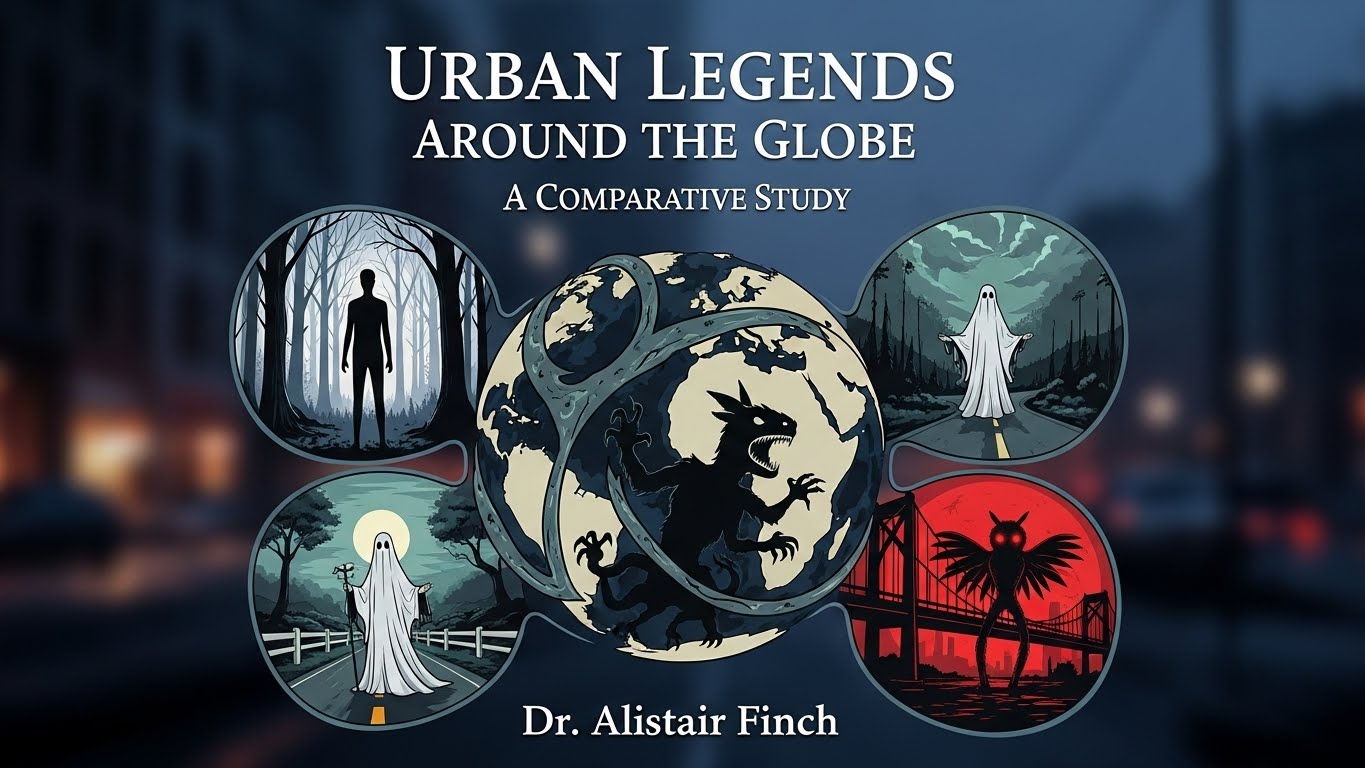
Urban Legends Around the Globe: A Comparative Study
Urban legends have been a part of human culture for centuries, captivating the imaginations of people across the globe. These stories, often eerie and mysterious, have transcended borders and become an integral part of folklore in many societies. In this comprehensive study, we delve into the fascinating world of urban legends, exploring their origins, variations, and cultural significance.
The Origins of Urban Legends
Urban legends, as a genre, emerged as a form of modern folklore characterized by their intriguing narratives and moral undertones. Unlike traditional myths and legends, urban legends are set in contemporary times, featuring plausible scenarios that often contain a twist or a shock factor. These stories typically spread through word of mouth, social media, and other forms of mass communication, evolving with each retelling.
Many urban legends can be traced back to ancient myths and fables, reflecting the human penchant for storytelling. For example, the tale of the “Vanishing Hitchhiker” has variations that span across different cultures and eras. This classic story involves a driver picking up a hitchhiker who mysteriously disappears from the vehicle, often leaving behind a chilling item or message. Such stories tap into universal fears and curiosities, making them relatable to diverse audiences.
Regional Variations and Cultural Context
Urban legends often reflect the unique cultural and societal contexts of their origin, leading to variations that resonate with local audiences. In the United States, urban legends like the “Hook Man” and “Bloody Mary” have become staples of Halloween lore, often serving as cautionary tales for young audiences. These stories emphasize themes of caution and the consequences of reckless behavior.

In contrast, Japanese urban legends, known as kaidan, often feature supernatural elements rooted in Shinto and Buddhist beliefs. Stories like “Kuchisake-onna,” also known as the “Slit-Mouthed Woman,” involve vengeful spirits and moral lessons about vanity and deceit. Such legends highlight the cultural importance of respect and humility in Japanese society.
In Africa, urban legends often draw from traditional tribal stories, blending modern elements with age-old folklore. The tale of the “Tokoloshe,” a mischievous and malevolent creature, illustrates the region’s rich tapestry of myth and superstition. These stories often serve as explanations for unexplainable events and caution against straying from societal norms.
The Role of Urban Legends in Society
Urban legends play a crucial role in society by reflecting collective fears, anxieties, and moral values. They often serve as cautionary tales, warning individuals about potential dangers and societal taboos. By embodying universal themes such as fear of the unknown or the consequences of hubris, these stories resonate with audiences worldwide.
Moreover, urban legends function as a form of social commentary, highlighting societal issues and cultural shifts. The spread of legends like the “Black-Eyed Children” in the digital age underscores concerns about technology, privacy, and the erosion of trust. Similarly, legends about haunted locations or cursed objects often explore themes of history, memory, and the supernatural.
To explore the cultural significance of urban legends further, visit the Smithsonian Magazine, which provides deeper insights into folklore and its impact on society.

Comparative Analysis of Global Urban Legends
Comparing urban legends across different cultures reveals intriguing patterns and variations. In North America, legends often revolve around urban settings and modern technology, reflecting the region’s rapid urbanization and technological advancement. Stories like the “Killer in the Backseat” and “The Choking Doberman” highlight themes of vulnerability and the unexpected.
European urban legends frequently intertwine with historical events and locations. The legend of the “Pied Piper of Hamelin,” for instance, combines elements of historical fact with folklore, serving as a cautionary tale about broken promises and the power of retribution. Such legends often explore themes of justice and morality, resonating with audiences across generations.
In Asia, urban legends often emphasize supernatural elements and moral lessons. The story of “Teke Teke,” a vengeful spirit from Japan, underscores the consequences of neglecting societal responsibilities. These legends frequently reflect cultural beliefs in spirits and the afterlife, offering moral guidance through their narratives.
For a broader understanding of how urban legends manifest across different cultures, the Encyclopedia Britannica provides an extensive overview of folktales and their variations.
The Evolution of Urban Legends in the Digital Age
The advent of the internet and social media has significantly impacted the dissemination and evolution of urban legends. Stories that once spread through oral tradition and print media now reach global audiences within minutes, thanks to platforms like Reddit and Twitter. The digital age has given rise to new legends, such as “Slender Man” and “Momo,” which thrive on the interactive nature of online communities.

This shift has also led to the emergence of “creepypasta,” a genre of user-generated horror stories that often blur the line between fiction and reality. These stories capitalize on the anonymity and virality of online platforms, creating a new frontier for modern urban legends. As a result, the digital age has expanded the reach and influence of urban legends, allowing them to adapt and evolve in unprecedented ways.
For insights into how digital platforms shape the spread of urban legends, explore resources like the Pew Research Center, which offers valuable data on the impact of the internet on communication and culture.
Takeaways
Urban legends continue to captivate audiences worldwide, serving as a mirror for societal fears, values, and cultural identities. By examining these stories through a comparative lens, we gain a deeper appreciation for their complexity and enduring appeal. Whether rooted in ancient myths or inspired by modern anxieties, urban legends remain a vital part of our collective imagination, connecting us across generations and continents.
As we navigate an ever-changing world, urban legends remind us of the power of storytelling to shape our perceptions and guide our actions. To delve further into the fascinating world of folklore and urban legends, visit the Estonian Folklore Archive, which offers extensive resources and research on global folklore traditions.
The Psychological Appeal of Urban Legends
The allure of urban legends goes beyond mere entertainment; they tap into fundamental aspects of human psychology. These stories often exploit our inherent fear of the unknown, playing on anxieties about safety, trust, and the supernatural. The ambiguity and mystery surrounding urban legends heighten their intrigue, as audiences are left to ponder the “what ifs” and “could it be true?” scenarios.
Psychologically, urban legends act as a form of cognitive processing, allowing individuals to explore their fears in a controlled environment. By confronting these fears through storytelling, people can experience a sense of catharsis and emotional release. Additionally, the communal nature of sharing and discussing urban legends fosters social bonds, as people collectively engage in the suspense and thrill of the unknown.
Research in the field of psychology, such as that conducted by the American Psychological Association, offers insights into how urban legends and other narratives impact human behavior and cognition.
Urban Legends as Cultural Artifacts
Urban legends serve as cultural artifacts, preserving the values, beliefs, and fears of the societies from which they originate. These stories often encapsulate historical events, societal changes, and cultural norms, providing a snapshot of a particular time and place. As such, urban legends are valuable tools for cultural historians and anthropologists seeking to understand the evolution of human societies.
For example, the legend of the “Choking Doberman” reflects contemporary concerns about home security and the potential dangers lurking within our own homes. Similarly, tales of haunted buildings or cursed objects often mirror historical events, such as wars or natural disasters, that have left an indelible mark on a community’s collective consciousness.
The exploration of urban legends as cultural artifacts is supported by the work of institutions like the Smithsonian Center for Folklife and Cultural Heritage, which documents and analyzes folklore traditions worldwide.
The Future of Urban Legends

As technology continues to evolve and global communication becomes increasingly instantaneous, the future of urban legends is poised for transformation. Virtual reality and augmented reality technologies may introduce new dimensions to these stories, allowing individuals to immerse themselves in interactive narratives that blur the lines between fiction and reality.
Moreover, as cultural exchange and globalization continue to accelerate, urban legends are likely to become even more hybridized, incorporating elements from diverse traditions and regions. This cross-pollination of ideas will likely give rise to new legends that reflect the interconnectedness of our modern world, while still preserving the unique characteristics of local cultures.
Ultimately, urban legends will continue to evolve and adapt, serving as a testament to the enduring power of storytelling in shaping human experience. Whether exploring tales of the supernatural, the bizarre, or the unexplained, urban legends will remain a vital part of our cultural landscape, offering insights into the complexities of human nature and society.
For those interested in the future trajectories of folklore and storytelling, the JSTOR Folklore Collection provides access to a wide range of scholarly articles and research on these topics.
Takeaways
In conclusion, urban legends are a dynamic and multifaceted aspect of cultural expression, bridging the gap between past and present, fiction and reality. Through their ability to adapt and resonate with audiences across the globe, these stories encapsulate the fears, values, and imaginations of diverse societies. As we continue to explore the depths of urban legends, we uncover not only the stories themselves but also the rich tapestry of human experience that they represent.
Whether serving as cautionary tales, cultural artifacts, or psychological explorations, urban legends are a testament to the enduring power of narrative and the universal human desire to make sense of the world around us. As new legends emerge and old ones are reimagined, the study of urban legends will remain a vital and ever-evolving field, offering endless opportunities for discovery and understanding.
About the Author